Patient Safety in Blood Transfusions
Why Preparation Matters
Blood transfusions save millions of lives every year, supporting patients during surgery, trauma, cancer treatment, and many other clinical situations. However, while transfusion is a routine medical procedure, it is not without risks. Among the most serious complications is transfusion incompatibility, a preventable event that highlights the critical importance of patient safety.
Although severe transfusion reactions are uncommon, they can have devastating consequences. In many cases, these events are linked not to a lack of clinical knowledge, but to failures in patient identification, communication, or adherence to established safety protocols. This makes transfusion medicine a powerful example of why patient safety must remain at the center of healthcare education and practice.
Patient Safety Starts Before the Transfusion
Ensuring a safe transfusion involves much more than selecting the correct blood product. Every step, from confirming the indication for transfusion to verifying the patient’s identity at the bedside, plays a role in preventing errors.
Even with standardized procedures, human factors such as distractions, workload, and communication failures can increase the risk of mistakes. Developing a strong safety culture means preparing healthcare professionals to recognize these risks and consistently apply best practices, especially in high-pressure environments.
Recognizing and Responding to Transfusion Reactions
Early recognition of a transfusion reaction can significantly improve patient outcomes. Symptoms such as fever, chills, shortness of breath, hypotension, or back pain should prompt clinicians to stop the transfusion immediately and begin the appropriate evaluation and management.
This is where simulation-based learning makes a difference. With Body Interact, learners can practice:
- dentifying transfusion reactions,
- assess patient deterioration in real time, and
- make clinical decisions in a realistic, risk-free environment.
By experiencing the consequences of their actions, they develop both clinical reasoning and the confidence to respond effectively in real-world situations.
Building Safer Clinicians Through Simulation
Because serious transfusion reactions are relatively rare, many healthcare professionals have limited opportunities to manage them in clinical practice. Body Interact bridges this gap through immersive virtual patient simulations that expose learners to high-risk scenarios without compromising patient safety.
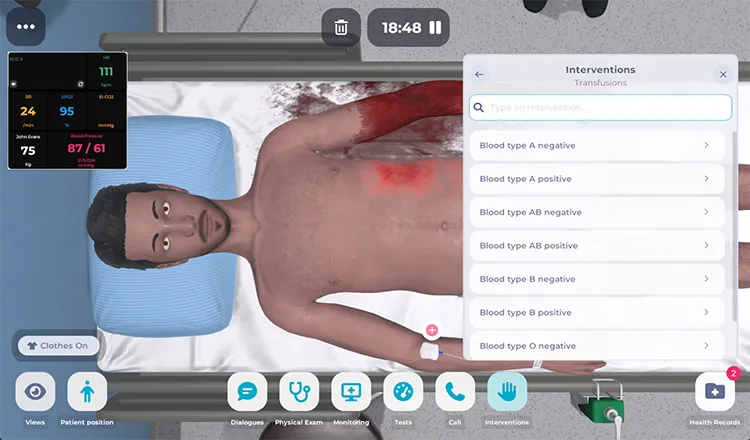
By practicing transfusion-related cases, learners can:
- Apply safe transfusion protocols.
- Strengthen clinical reasoning.
- Recognize early signs of patient deterioration.
- Improve communication and teamwork.
- Build confidence in managing critical events.
Patient safety is more than following protocols, it is about making informed decisions, communicating effectively, and acting promptly when every second counts. Through realistic simulation, Body Interact helps healthcare professionals develop these essential competencies, ultimately contributing to safer care and better patient outcomes.
Frequently Asked Questions
What is transfusion incompatibility?
Transfusion incompatibility is an adverse immune reaction that occurs when a patient receives blood components that do not match their blood type, most seriously in cases of ABO or Rh mismatch.
What are the first signs of a transfusion reaction?
Fever, chills, shortness of breath, hypotension, and back pain are among the earliest warning signs. Clinicians are trained to stop the transfusion immediately when these appear.
How does virtual patient simulation help prevent transfusion errors?
Platforms like Body Interact let learners practice full transfusion scenarios, including incompatibility reactions, in a real time physiological simulation, so they build recognition skills and response confidence before encountering these rare, high stakes events in clinical practice.
Curious to see how Body Interact prepares learners for transfusion safety scenarios?
By Ana Santa – MSN, APRN
Editorial Manager