Medical Assistant Education with AI-Driven Virtual Patients
Medical assistants are one of the fastest-growing healthcare professions. According to the U.S. Bureau of Labor Statistics, between 2024 and 2026, there are approximately 763,000 to 811,000 medical assistants employed in the United States, and this number is projected to continue growing.
Educators are expected to prepare students for a role that combines clinical tasks, administrative responsibilities, patient communication, and procedural accuracy. These multifaceted responsibilities require professionals who can combine technical knowledge with genuine compassion and meticulous attention to detail.
For this reason, medical assistant education must provide students with the knowledge, tools, and realistic practice opportunities they need to succeed in this demanding role.
AI-driven virtual patients offer medical assistant programs a practical way to help students build confidence, improve clinical reasoning, and become familiar with common patient encounters in a safe and controlled learning environment.
How AI-driven virtual patients support medical assistant students
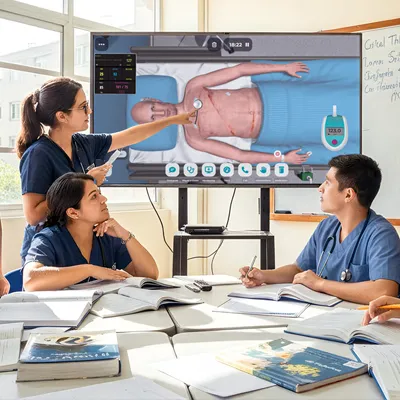
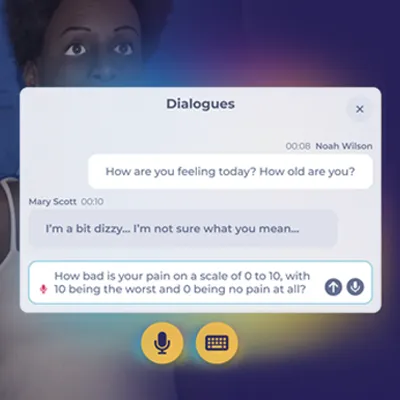
Body Interact’s AI-driven virtual patients allow students to practice realistic healthcare situations in a safe simulation environment. Students can interact with patients, collect relevant information, identify priorities, make decisions, and reflect on their actions without putting real patients at risk.
This results in a dynamic activity that captures students’ attention, encourages participation, and makes clinical concepts easier to connect with real practice.
For medical assistant programs, virtual patient simulations can help students:
- Build confidence before clinical placement
- Practice clinical and interprofessional communication
- Become familiar with common clinical procedures
- Repeat patient encounters to strengthen skills and confidence
- Prepare for both routine and more complex healthcare situations
- Enhance patient safety and competence without posing risks
Body Interact for Medical Assistant Programs
Body Interact supports medical assistant education through realistic virtual patient simulations that can seamlessly be integrated into the curriculum.
The available scenarios cover a wide range of situations.
Below are some of the virtual patient scenarios tailored for Medical Assistant programs:
- Well baby Check-Up
- School physical examination
- Student athlete’s health and physical form completion
- Diabetes testing and management
- Subcutaneous injection for insulin administration
- Latent tuberculosis
- Acute upper respiratory infection
- Seasonal influenza vaccination
- Dressing change for a surgical wound
- Surgical suture after appendectomy
“These scenarios provide opportunities for students to develop and apply clinical decision-making, patient assessment, documentation, critical thinking, and communication skills in realistic patient-care situations using the Body Interact platform.
The goal is to bridge classroom knowledge with clinical application, preparing Medical Assistant students for success in both externship experiences and professional practice.”
The simulation scenarios presented in this article were developed by Carol Parr-Garcia, RN, BSN, Medical Assistant Instructor, as educational tools for Vista Adult School.
Educators can use these screen-based simulations for: classroom-based learning, skills lab preparation, independent student practice, clinical readiness activities, scenario-based discussion, remediation and reinforcement, debriefing and reflection.
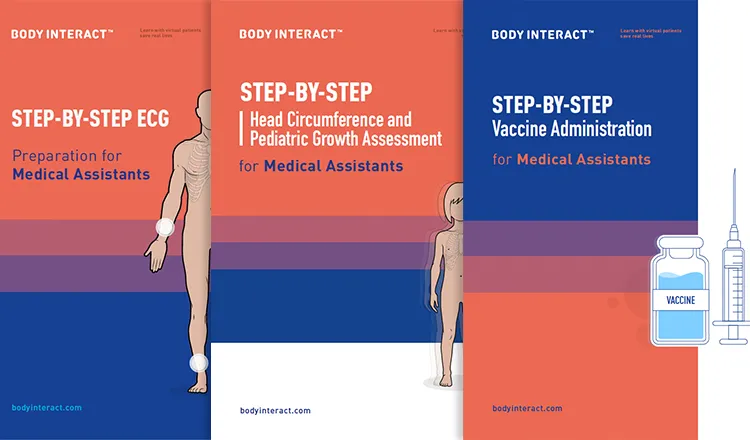
Body Interact also provides step-by-step guides for selected procedures to complement the clinical scenarios. This ensures that students can memorize all steps, practice accurately, and build both knowledge and confidence.
See how Body Interact can support your Medical Assistant program. Book a live demo today!
References
Figueroa Gray M, Coleman K, Walsh-Bailey C, Girard S, Lozano P. An Expanded Role for the Medical Assistant in Primary Care: Evaluating a Training Pilot. Perm J. 2021 Nov 29;25:20.091. doi: 10.7812/TPP/20.091. PMID: 35348053; PMCID: PMC8784025.
U.S. Bureau of Labor Statistics. (2024, April 3). Occupational employment and wages, May 2023: 31-9092 Medical Assistants. U.S. Department of Labor.
https://www.bls.gov/oes/2023/may/oes319092.htm#nat